The internet has changed dramatically since it first became available to the public.
Early websites were mostly simple pages where people consumed information. Later, social media, online marketplaces, search engines, streaming platforms, and cloud services transformed the internet into an interactive environment where billions of people communicate, work, shop, create, and share content every day.
Now, another vision of the internet is gaining attention: Web3.
Web3 is often described as a more decentralized version of the internet where users can have greater control over digital assets, identities, and online interactions.
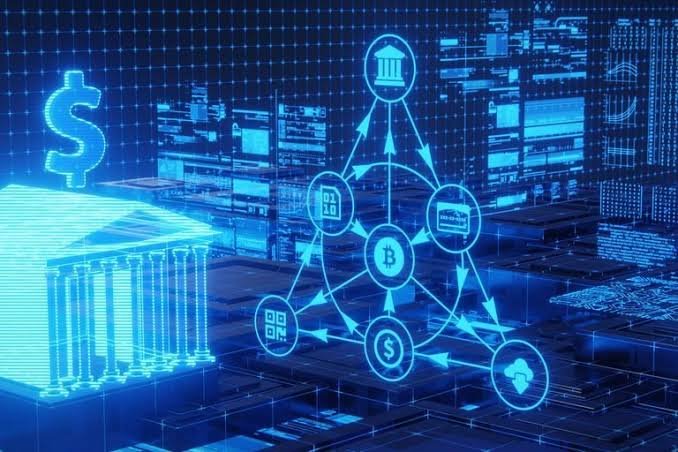
The concept is closely connected to technologies such as blockchain, cryptocurrencies, smart contracts, decentralized applications, and digital ownership.
But Web3 can also be confusing. Different people use the term in different ways, and not every technology associated with Web3 is necessarily decentralized or useful.
So, what exactly is Web3? How is it different from the internet we use today, and what could the future of the internet look like?
This beginner-friendly guide explains the basic ideas behind Web3 and explores its potential benefits, challenges, and future.
What Is Web3?
Web3 is a broad vision for an internet that is more decentralized and can give users greater control over digital assets and online interactions.
The idea is generally associated with blockchain technology and decentralized networks.
Traditional internet services often rely on centralized companies.
For example, a company may operate the servers, control user accounts, store information, and determine how its platform works.
Web3 advocates envision systems where some of these functions can be distributed across networks rather than controlled entirely by one organization.
A simple way to understand the evolution is:
Web1: Read
Web2: Read + Write
Web3: Read + Write + Own
This is an oversimplification, but it captures an important part of the Web3 idea.
What Was Web1?
The earliest version of the public internet is often called Web1.
Web1 websites were primarily designed for reading information.
A website might contain text, images, and links, but visitors generally had limited ability to interact with the content.
Think of it as a digital library.
You visit a page, read the information, and move to another page.
There were relatively few tools for ordinary users to create and publish content.
What Is Web2?
The internet most people use today is often described as Web2.
Web2 made the internet highly interactive.
Users can:
- Create social-media posts
- Upload videos
- Write blogs
- Comment on content
- Shop online
- Use online banking
- Collaborate on documents
- Stream entertainment
- Participate in online communities
Platforms became extremely powerful because they provided the infrastructure that connected users.
However, this model also created a high degree of centralization.
A small number of large companies operate many of the services people use every day.
These companies may control accounts, data, recommendation systems, advertising platforms, and online marketplaces.
Web3 proposes a different model.
How Is Web3 Different?
The major idea behind Web3 is decentralization.
Instead of relying entirely on one company to operate a service, some Web3 systems use distributed networks.
Blockchain technology can provide a shared record that is maintained by multiple participants.
Smart contracts can automatically execute predefined rules.
Digital wallets can allow users to interact with blockchain-based applications and hold certain digital assets.
Together, these technologies can create applications that operate differently from traditional websites and apps.
What Is Decentralization?
Decentralization means distributing control or responsibility across multiple participants rather than placing everything under one central authority.
Imagine a traditional online platform.
The company might control:
Servers → Accounts → Data → Rules → Transactions
In a decentralized application, some of these functions may instead be handled by a blockchain network and smart contracts.
This could reduce dependence on a single company.
However, Web3 applications are not automatically decentralized.
A project may use blockchain technology while still relying heavily on centralized companies, servers, developers, or infrastructure.
The level of decentralization varies from project to project.
What Role Does Blockchain Play?
Blockchain is one of the technologies most closely associated with Web3.
A blockchain is a distributed ledger that records information across a network according to predefined rules.
Cryptocurrencies were among the first major blockchain applications.
But blockchain can also be used for other purposes, including digital assets, decentralized finance, identity systems, supply-chain records, and smart contracts.
In the Web3 vision, blockchain can act as a shared infrastructure for digital ownership and transactions.
What Are Smart Contracts?
Smart contracts are programs that run on blockchain networks.
They can automatically execute actions when specified conditions are satisfied.
For example:
“If a payment is received, transfer a digital asset.”
Instead of relying entirely on a company or intermediary to perform the action, the rules can be encoded into software.
Smart contracts are important to Web3 because they can provide automated functionality for decentralized applications.
However, smart contracts are software, and software can contain bugs.
A poorly designed smart contract can create security problems.
What Are Decentralized Applications?
A decentralized application, often called a dApp, is an application that uses blockchain technology or decentralized infrastructure for some of its functions.
Traditional applications may rely on centralized servers.
A decentralized application may use smart contracts and blockchain networks to manage certain operations.
Examples of areas where decentralized applications have been developed include:
- Finance
- Gaming
- Digital collectibles
- Social networks
- Identity
- Marketplaces
- Community governance
The exact architecture varies considerably between applications.
What Are Digital Wallets?
Digital wallets are another important part of Web3.
A blockchain wallet can allow users to manage cryptographic keys and interact with blockchain networks.
Depending on the system, a wallet may be used to:
- Send and receive digital assets
- Sign transactions
- Connect to decentralized applications
- Manage certain digital collectibles
- Prove control of blockchain addresses
A crucial concept is that users may be responsible for protecting their private keys or recovery information.
If a private key is lost or stolen, recovering access may be extremely difficult or impossible.
This creates both freedom and responsibility.
What Does “Digital Ownership” Mean?
One of Web3’s major promises is greater digital ownership.
On many traditional platforms, you may purchase or earn a digital item, but the platform ultimately controls the system in which that item exists.
Blockchain-based systems can represent ownership of certain digital assets using tokens recorded on a blockchain.
For example, a digital collectible can be associated with a blockchain token.
This can make ownership easier to verify within that blockchain ecosystem.
However, owning a blockchain token does not automatically mean owning the copyright, trademark, or other legal rights associated with the underlying content.
The legal meaning of digital ownership depends on the specific asset, agreement, and applicable law.
Web3 and Gaming
Gaming is one area where Web3 has received significant attention.
Traditional games often store player items inside centralized databases.
Web3 games can represent certain digital items as blockchain-based assets.
In theory, players could own and trade these assets outside the game environment.
Supporters believe this could give players more control over their digital possessions.
Critics argue that blockchain can add unnecessary complexity and financial speculation to games.
The long-term success of Web3 gaming will likely depend on whether blockchain features actually make games more enjoyable and useful.
Web3 and Finance
Decentralized finance, often called DeFi, is another major Web3 category.
DeFi applications attempt to provide financial services using blockchain networks and smart contracts.
Potential services include:
- Trading
- Lending
- Borrowing
- Payments
- Asset management
One of the major attractions is that certain financial services can operate without traditional intermediaries.
However, DeFi can involve significant financial and technical risks.
Smart-contract vulnerabilities, scams, market volatility, regulatory uncertainty, and user mistakes can all create serious problems.
Therefore, Web3 financial applications should not be treated as risk-free alternatives to traditional financial institutions.
Web3 and Social Media
Another Web3 idea is decentralized social media.
Traditional social platforms generally control user accounts and data.
A decentralized social network could potentially allow users to have greater control over their identity and social connections.
In some models, users could potentially move their identity or social graph between compatible applications.
This could reduce dependence on a single platform.
However, decentralized social networks face difficult challenges involving moderation, spam, governance, performance, and user experience.
Web3 and Digital Identity
Web3 could also change how digital identity works.
Today, users typically create separate accounts on different platforms.
Web3 systems can potentially allow people to use blockchain-based identities or credentials across multiple services.
This could make online identity more portable.
For example, a person might prove that they possess a particular credential without repeatedly creating accounts and submitting documents.
Privacy is an important consideration here.
A poorly designed identity system could expose more information than necessary.
Future systems will need to balance verification, privacy, security, and convenience.
Web3 and the Metaverse
Web3 is often discussed alongside the metaverse.
The metaverse generally refers to persistent, interconnected digital environments where people can interact, work, play, or socialize.
Web3 advocates have proposed using blockchain to represent digital ownership within such environments.
For example, users might own digital clothing, artwork, land, or other virtual assets.
However, the metaverse does not require blockchain technology.
Virtual worlds can exist using traditional centralized systems.
Whether blockchain becomes an important part of future virtual environments remains uncertain.
Potential Benefits of Web3
Web3 advocates point to several potential benefits.
Greater User Control
Users may have more control over certain digital assets and identities.
Reduced Dependence on Intermediaries
Smart contracts can automate some transactions without requiring traditional intermediaries.
Digital Ownership
Blockchain networks can provide verifiable records associated with digital assets.
Open Networks
Some decentralized protocols are designed to allow different applications to interact with shared infrastructure.
Transparency
Certain blockchain transactions can be publicly inspected and verified.
These benefits are promising, but they depend heavily on the quality and design of the underlying system.
Challenges of Web3
Web3 also has major challenges.
Complexity
Wallets, blockchain addresses, transaction fees, private keys, and smart contracts can be difficult for beginners.
Security
Users may face phishing attacks, scams, malicious applications, and smart-contract vulnerabilities.
Scalability
Some blockchain networks have struggled with transaction speed, network congestion, or fees.
Regulation
Governments around the world are developing different approaches to blockchain-based assets and services.
User Experience
Traditional applications are often easier to use than many Web3 applications.
Decentralization Questions
Some projects marketed as decentralized may still depend heavily on centralized infrastructure.
Environmental Concerns
Energy use varies significantly depending on the blockchain’s consensus mechanism. Some networks use energy-intensive methods, while others are designed to use much less energy.
Is Web3 the Future of the Internet?
That question is impossible to answer with certainty.
Some Web3 ideas may become important parts of the internet.
Others may disappear.
It is also possible that the future internet will combine elements of Web2 and Web3.
For example, a service could use traditional servers for most of its application while using blockchain technology for specific functions such as digital ownership or payments.
This hybrid approach could provide practical benefits without forcing users to interact directly with complicated blockchain systems.
The Role of Artificial Intelligence
Artificial Intelligence could also influence the future of Web3.
AI systems could interact with blockchain networks, automate transactions, analyze decentralized data, or help users navigate complex applications.
At the same time, blockchain technology could potentially provide ways to verify the origin or integrity of certain digital information.
The combination of AI, blockchain, cloud computing, and cybersecurity could create entirely new types of digital services.
However, combining technologies does not automatically make a product better. Each technology needs to provide a meaningful benefit.
What Will the Internet Look Like in the Future?
The future internet will probably not belong entirely to Web2 or Web3.
Instead, it may be a mixture of technologies.
People may continue using familiar centralized services because they are convenient, fast, and easy to use.
At the same time, decentralized protocols may become more common in areas where users value digital ownership, open access, portability, or reduced dependence on intermediaries.
Artificial Intelligence may make interfaces more natural.
Cloud computing will continue providing infrastructure.
Connected devices will expand the Internet of Things.
Blockchain may provide specialized infrastructure for digital assets and transactions.
Cybersecurity and privacy technologies will become increasingly important as more aspects of life move online.
Should You Learn About Web3?
Even if you never use cryptocurrency or decentralized applications, understanding the basic concepts can be valuable.
Web3 brings together several important areas of technology:
- Blockchain
- Cryptography
- Digital identity
- Software development
- Financial technology
- Cybersecurity
- Digital ownership
- Decentralized networks
Students and professionals interested in technology can benefit from understanding both the potential and limitations of these systems.
The most important thing is to approach Web3 critically.
Not every project is innovative.
Not every blockchain application solves a real problem.
And not every claim about the future of the internet will become reality.
Conclusion
Web3 is a broad vision for a more decentralized and user-controlled internet.
It is associated with blockchain networks, smart contracts, digital wallets, decentralized applications, cryptocurrencies, digital assets, and new approaches to online identity and ownership.
Its biggest promise is that users could potentially gain greater control over certain aspects of their digital lives instead of relying entirely on centralized platforms.
But Web3 also faces serious challenges involving usability, security, scalability, regulation, privacy, and decentralization.
The future of the internet is therefore unlikely to be as simple as replacing today’s websites with blockchain-based applications.
Instead, the internet will probably continue evolving through a combination of technologies.
Some Web3 ideas may become mainstream. Others may remain specialized or disappear.
Ultimately, the technologies that succeed will be the ones that solve real problems and provide meaningful benefits to users.