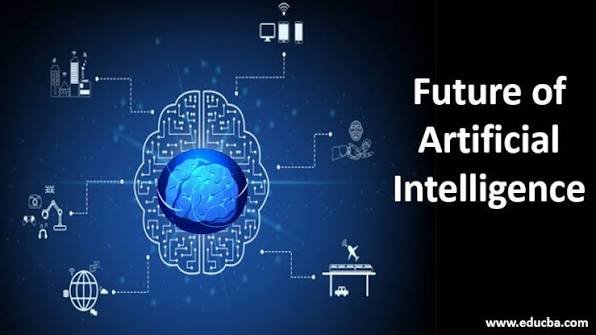
Artificial Intelligence, commonly known as AI, has become one of the most influential technologies of the 21st century. Although the idea of intelligent machines has existed for decades, recent advances in computing power, data, and machine learning have made AI a part of everyday life. Today, people interact with AI when they use smartphones, search engines, social media, online shopping platforms, navigation apps, streaming services, and digital assistants. Businesses, hospitals, schools, banks, and governments are also increasingly using AI to improve the way they work.
AI is changing not only the technology we use but also the way we live, work, communicate, learn, and make decisions. It offers enormous opportunities, but it also raises important questions about privacy, employment, misinformation, fairness, and human responsibility. Understanding what AI is and how it affects society is therefore becoming increasingly important.
What Is Artificial Intelligence?
Artificial Intelligence refers to computer systems and machines that can perform tasks that traditionally require human intelligence. These tasks include understanding language, recognizing images and sounds, identifying patterns, solving problems, making predictions, and assisting with decisions.
Traditional computer programs generally follow instructions written by humans. AI systems, particularly those based on machine learning, can instead learn patterns from data. For example, if an AI system is shown thousands of photographs of cats and dogs, it can learn characteristics that help it distinguish between the two.
One important branch of AI is machine learning. Machine learning allows computers to improve their performance by identifying patterns in data rather than relying entirely on explicitly programmed instructions. Another area is deep learning, which uses complex neural networks to process large amounts of information. These technologies have contributed to major advances in speech recognition, image analysis, language processing, and generative AI.
Generative AI is a particularly visible development. It can create new text, images, audio, video, and computer code based on instructions provided by users. This has opened up new possibilities for education, business, entertainment, research, and creative work.
AI in Everyday Life
Many people use AI every day without thinking about it. When a smartphone recognizes a person’s face to unlock the device, AI may be involved. When an email service identifies unwanted messages as spam, AI can help. When a navigation application predicts traffic and suggests a faster route, intelligent algorithms may be working in the background.
Streaming platforms also use AI to personalize recommendations. If someone regularly watches a particular type of movie or listens to a certain style of music, an AI system can analyze their behavior and recommend similar content.
Online shopping provides another common example. Retail websites can analyze browsing and purchasing patterns to recommend products that customers may be interested in. AI-powered chatbots can also answer basic customer questions and provide assistance at any time of the day.
Social media platforms use AI for several purposes, including recommending content, identifying potentially harmful material, recognizing patterns of suspicious activity, and personalizing users’ feeds. These systems can make online services more convenient, although they also raise questions about how algorithms influence what people see and how information spreads.
AI and Education
Education is another area where AI is creating significant change. AI-powered tools can provide students with explanations, practice exercises, language assistance, feedback, and personalized learning support. Instead of every student receiving exactly the same learning experience, technology can potentially adjust materials according to individual needs and progress.
Teachers can also benefit from AI. It can help create lesson plans, generate examples, organize information, analyze certain types of student data, and automate repetitive administrative tasks. This can give educators more time to focus on teaching and interacting with students.
However, AI should not replace independent thinking. Students need to learn how to research, analyze information, write, solve problems, and form their own opinions. AI-generated information can sometimes contain mistakes or misleading claims. Therefore, students should treat AI as a tool that supports learning rather than as a substitute for learning.
The use of AI in education also creates questions about academic honesty. If students simply submit AI-generated work as their own, they may receive a grade without developing the skills the assignment was designed to teach. Schools and colleges will therefore need to develop responsible approaches to AI use.
AI in Healthcare
Healthcare is one of the fields where AI could have a particularly important impact. Doctors and researchers must often examine enormous amounts of medical information, including images, test results, scientific studies, and patient records. AI can help analyze such information and identify patterns.
For example, AI systems can assist medical professionals in examining certain types of medical images. AI can also support research by helping scientists analyze large datasets and identify possible relationships between diseases, treatments, and biological factors.
AI may also help with administrative tasks in healthcare, such as organizing information and assisting with documentation. Reducing repetitive work could allow healthcare professionals to spend more time with patients.
However, healthcare is a high-stakes field, so AI must be used carefully. An AI system can make errors, and its recommendations should not automatically replace professional medical judgment. Privacy and security are also extremely important because medical information is highly sensitive.
AI and the Workplace
AI is transforming workplaces across many industries. Businesses use AI to analyze data, communicate with customers, detect unusual activity, automate repetitive processes, and support decision-making.
For employees, AI can act as a productivity tool. It can help summarize documents, organize information, generate ideas, draft routine communications, analyze data, and assist with certain technical tasks. This can allow people to spend more time on responsibilities that require creativity, judgment, communication, and leadership.
At the same time, AI is creating concern about employment. Some tasks that are currently performed by humans may eventually become automated. Jobs involving highly repetitive or predictable activities may be particularly affected.
However, technological change does not necessarily mean that all affected jobs will disappear. In many cases, jobs change as new technologies are introduced. Some occupations may require workers to develop new skills, while completely new professions may emerge.
The future workplace is therefore likely to involve greater collaboration between humans and AI. Learning how to use AI effectively may become an important skill in many careers.
AI and Transportation
Transportation is another field being transformed by AI. Navigation applications already use intelligent systems to estimate traffic conditions and recommend routes. Modern vehicles also contain AI-assisted features such as automatic emergency braking, lane assistance, parking assistance, and adaptive cruise control.
Self-driving vehicle technology is a more ambitious application of AI. Autonomous systems use cameras, sensors, maps, and software to understand their surroundings and make driving decisions.
Although autonomous transportation could potentially improve safety and convenience, it also presents significant technical, legal, and ethical challenges. Machines must be able to respond safely to unpredictable situations, and society must determine who is responsible when automated systems make mistakes.
AI and Creativity
AI is also changing creative industries. Generative AI can produce written content, images, music, designs, and computer code. Writers, designers, programmers, marketers, and other professionals can use these tools to brainstorm ideas and speed up certain parts of their work.
Some people worry that AI-generated content could reduce the value of human creativity. Others believe that AI can become a new creative instrument, similar to how cameras, computers, and digital editing tools transformed earlier creative industries.
The most useful approach may be to view AI as a tool rather than a replacement for human creativity. Human experiences, emotions, cultural understanding, personal perspectives, and originality remain important. AI can generate possibilities, but people still need to decide what is meaningful, appropriate, and valuable.
The Benefits of Artificial Intelligence
AI offers numerous potential benefits to society.
First, it can save time by automating repetitive tasks. A computer can process large amounts of information much faster than a person working manually.
Second, AI can increase productivity. Employees can use intelligent tools to assist with research, writing, analysis, programming, communication, and other activities.
Third, AI can improve accessibility. Speech-to-text systems, automatic translation, image descriptions, and other technologies can make information and digital services easier for more people to access.
Fourth, AI can support scientific research. Scientists can use AI to examine enormous datasets and identify patterns that might otherwise be difficult to find.
Finally, AI has the potential to help solve complex problems. From improving energy efficiency to supporting disaster prediction and scientific discovery, intelligent systems may become valuable tools for addressing major global challenges.
Challenges and Risks of AI
Despite its advantages, AI also creates serious challenges.
One concern is privacy. AI systems often depend on large amounts of data. If personal information is collected, stored, or analyzed irresponsibly, people’s privacy may be threatened.
Another concern is bias. AI systems learn from data, and data can contain human biases. If those biases are not identified and addressed, an AI system may produce unfair results.
Misinformation is another major issue. Modern AI can create realistic-looking text, photographs, audio, and videos. This makes it increasingly difficult for people to determine whether some content is genuine. False information can influence public opinion, damage reputations, and create confusion.
There is also the issue of job disruption. Although AI may create new opportunities, some workers could face significant changes or displacement. Education and retraining will be important to help people adapt.
Another challenge is overdependence on technology. If people rely too heavily on AI for decisions and information, they may become less likely to think critically for themselves. Human oversight is therefore essential.
The Importance of Responsible AI
As AI becomes more powerful, responsible development and use become increasingly important. Governments, technology companies, researchers, educators, and ordinary users all have roles to play.
AI systems should be designed with safety, fairness, privacy, and transparency in mind. People should understand when they are interacting with AI and, where appropriate, how important decisions are being made.
Users also have responsibilities. They should verify important information, protect personal data, recognize that AI can make mistakes, and avoid using the technology in harmful or dishonest ways.
Education will be especially important. People need not only technical knowledge but also AI literacy—the ability to understand what AI can do, what its limitations are, and how to use it responsibly.
The Future of Artificial Intelligence
The future of AI is difficult to predict, but its influence is likely to continue growing. AI systems may become increasingly useful in science, medicine, education, transportation, business, engineering, entertainment, and everyday life.
The most important question is not simply whether AI will become more powerful. It is how humans will choose to use that power.
A future in which AI works alongside people could provide significant benefits. Machines can handle large-scale data processing and repetitive tasks, while humans can contribute judgment, empathy, creativity, ethical reasoning, and an understanding of social context.
For this future to succeed, society will need to balance innovation with responsibility. New technologies should be developed not only because they are possible, but because they can provide meaningful benefits while minimizing harm.
Conclusion
Artificial Intelligence is no longer a futuristic concept. It is already part of everyday life and is transforming the way people communicate, learn, work, travel, shop, create, and access information.
AI has the potential to make many tasks faster and easier, support scientific discoveries, improve healthcare, personalize education, and help businesses become more efficient. At the same time, it introduces challenges involving privacy, bias, misinformation, employment, security, and human dependence on technology.
AI itself is neither automatically good nor bad. Its impact depends on how people design, regulate, and use it. The goal should be to develop AI that complements human abilities rather than simply replacing them.
As AI continues to evolve, understanding the technology and using it responsibly will become increasingly important. The future will not simply be shaped by artificial intelligence—it will be shaped by the choices humans make about how artificial intelligence is used. With careful planning, responsible innovation, and strong human judgment, AI can become a powerful tool for improving our lives and building a better future.